You've written the final sentence. You've edited the manuscript, corrected the errors, chosen a title, and now you've reached the moment you've eagerly anticipated: taking your masterpiece into the book world. However, before you press that final upload button, consider a key question: does your book truly resemble a book?
A great manuscript can lose its professional essence when the formatting process is overlooked. A chapter heading sitting awkwardly at the bottom of a page, incorrect page numbers, inconsistent spacing between paragraphs, crowded margins, or an image that shifts out of place can instantly make a finished book feel unfinished. And do you know the most frustrating part? These are the little details that authors often stop noticing after working on the same manuscript for so long.
At that point, a book formatting checklist becomes something beyond just a checklist of technical details. It acts like the final quality evaluation of the book, correcting every page, chapter, heading, image, and section of both the front and back, and putting everything into place.
Regardless of whether you are releasing your first novel, non-fiction work, memoir, or any other genre, professional book formatting UK influences more than just aesthetics. It affects readability, consistency, navigation, coherence, and the overall experience a reader has from beginning to end.
So, give your book the look it deserves as good as the work you put into writing it.
This guide will explore the key components of a book formatting checklist, the errors writers often miss, and the last reviews that can elevate your manuscript from merely complete to genuinely ready for publication.
What Exactly Is Book Formatting?

Book formatting services UK involve converting a finished manuscript into an organised, refined interior that is prepared for reading, printing, or digital publication. It determines the arrangement of words, chapters, images, page numbers, and various other components within the book. Although book writing services form the core of a book, formatting a book decides the manner in which that core is displayed to the audience.
A well-formatted book takes care of uniformity through each page. This involves choosing suitable size and font, fixing the margin errors and line spacing, developing uniform chapter titles, placing page numbers, and handling headers and footers. It may also include organising front matter like the title and copyright pages, along with back matter such as acknowledgements, references, or a biography of the author.
The format of the book is influenced by the book genre being released. Print book formatting services thoroughly check the trim size, margins, gutter space, page breaks, and the arrangement of content on the actual page. An eBook demands a distinct strategy since its content can adapt to the device and preferences of the reader. Components like headings, navigation, visuals, and the table of contents must be organised in varied ways.
Moreover, formatting differs from editing or proofreading. Book editing services enhance the material, whereas proofreading detects language and typographical mistakes. Formatting a book usually emphasises the visual layout and technical appearance of the book. The main objective of book formatting is not to make each page appear intricate or ornate. Proper formatting should seem effortless. Readers ought to navigate the book easily without being hindered by inconsistent or poorly placed elements.
Why Does a Book Formatting Checklist Actually Matter?
A book formatting checklist might be just a straightforward list of technical specifications, yet it has a significant influence on how polished or incomplete your final book appears. After dedicating months or even years to writing a manuscript, it is common to concentrate so strongly on the writing part that visual and structural issues remain unobserved. Book Publishers Agency creates a formatting checklist that provides a well-structured method to pause and evaluate the book as an entire reading experience.
It Catches Small Errors Before Readers Do
A formatting checklist helps in correcting the minor errors that are often easily overlooked during the book publishing process. Incorrect page numbers, uneven spacing, awkward breaks between pages, absent headings, or misaligned images can influence the book's overall appearance. Systematically analysing these details enables authors to fix all issues before the final book is presented to the readers.
It Creates a Consistent Reading Experience
Consistency helps readers progress through a book without interruptions. A book formatting checklist guarantees that fonts, headings, paragraph spacing, indentation, page numbers, and chapter layouts maintain a consistent style throughout. When these elements stay consistent throughout, the book appears structured and more accessible, enabling readers to concentrate on the narrative or details instead of observing extraneous formatting alterations.
It Makes the Book Look Professional
A properly structured book leaves a favorable initial impact and demonstrates to readers that care has been taken with every aspect. Even typography, well-proportioned margins, tidy chapter designs, and suitable spacing create a refined and professional interior. A book formatting checklist guarantees that these visual aspects function cohesively, allowing the completed book to showcase the quality and dedication invested in its writing.
It Prevents Publishing Delays
Issues with formatting analysed at the last stage can result in avoidable alterations and postponements. Changes may be needed to incorrect page sizes, margins, numbering, image positioning, or file settings before a book can be submitted for publication. A checklist for book formatting UK provides authors with a straightforward method to examine these particulars before submitting their documents. Identifying potential problems early allows authors to prevent resubmissions, last-minute changes, and unforeseen delays. This helps in maintaining an organised publishing process and simplifies the transition from the finished manuscript to the final publication stage with assurance.
It Protects the Reading Experience
Effective book formatting UK ought to ensure reading is easy and fluid instead of diverting attention away from the material. A formatting checklist assists in spotting problems like dense text, uneven spacing, jagged page breaks, incorrectly placed headings, or badly aligned images. By reviewing these aspects before publication, authors can enhance the reading experience, enabling readers to concentrate on the narrative, concepts, or data without extraneous visual interruptions.
The Ultimate Book Formatting Checklist
A comprehensive book formatting checklist helps authors review every important detail, ensuring their manuscript is polished, consistent, readable, and publication-ready. Here is what comes under a complete formatting checklist.
Manuscript Preparation Checklist
A Manuscript Preparation Checklist assists authors in confirming that their research paper is thorough, precise, and prepared for submission. It generally involves reviewing the manuscript's title, abstract, keywords, introduction, methodology, results, discussion, and conclusion. Authors must ensure that tables, figures, references, and citations adhere to the necessary formatting style. The checklist guarantees correct grammar, spelling, clarity, and consistency across the manuscript. The ethical standards, author details, acknowledgements, and statements regarding conflicts of interest must be checked and presented as needed. Ultimately, the manuscript must be accurately proofread and examined in line with the target journal's submission specifications before submission.
Page Size and Trim Size Checklist
A Page Size and Trim Size Checklist guarantees that a manuscript or publication adheres to the necessary physical and digital formatting requirements. It assists writers in confirming that the document adheres to the proper page sizes set by the publisher, journal, or book printing service. The checklist must verify the chosen paper size, trim size, page orientation, margins, and complete layout. Writers must ensure that headers, footers, page numbers, figures, tables, and text stay within the specified printable area. Correct page and trim dimensions ensure uniformity, legibility, and a polished look. The final document must be thoroughly checked before submission or printing to confirm that all dimensions adhere to the necessary guidelines.
Font and Typography Checklist
A Font and Typography Checklist guarantees that a manuscript adheres to uniform and professional text formatting guidelines. It supports authors in confirming that the appropriate font family, size, and style are applied consistently across the document. The checklist must include headings, subheadings, main text, captions, footnotes, quotes, and references. Authors must ensure uniformity in bold, italic, capitalisation, spacing, and alignment as per the specified guidelines. Particular care must be taken with mathematical symbols, abbreviations, superscripts, subscripts, and non-English characters to avoid book formatting mistakes. Correct typography enhances readability and provides the document with a refined look. Before submission, authors must thoroughly examine each page to ensure that fonts and typographic features are uniform and meet the book formatting standards set by the publisher or journal.
Paragraph and Text Alignment Checklist
A Paragraph and Text Alignment Checklist guarantees that every text in a manuscript is well-structured, uniform, and simple to comprehend. It assists authors in confirming the proper arrangement of paragraphs, headings, subheadings, quotes, tables, captions, and additional text components. The checklist must verify if the text is left-aligned, centered, justified, or right-aligned in accordance with the specified formatting standards. Book formatting specialists must verify indentation, line and paragraph spacing, and uniformity throughout the document. Correct alignment fosters a polished look and enhances legibility. Before submission, the manuscript must be thoroughly examined to confirm that all paragraphs and text components adhere to the formatting guidelines set by the publisher or journal.
Chapter Formatting Checklist
A Chapter Formatting Checklist guarantees that every chapter in a manuscript adheres to a uniform, professional, and orderly format. It assists writers in confirming chapter titles, headings, subheadings, page numbers, margins, spacing, and paragraph formatting. The checklist must include the arrangement and styling of figures, tables, captions, footnotes, quotations, and references. Authors must make sure that every chapter maintains uniform fonts, styles, numbering methods, and alignment across the entire document. Effective book formatting services enhance clarity and establish a consistent look throughout the entire document. Before submission or publication, every chapter must be thoroughly examined against the publisher's or institution's guidelines to detect formatting mistakes and confirm adherence to all necessary standards.
Page Numbering Checklist
A Page Numbering Checklist guarantees that every page in a manuscript is numbered accurately and uniformly. It assists authors in confirming the position, order, and formatting of page numbers across the document. The checklist must verify that preliminary pages, chapters, appendices, references, and other parts adhere to the specified numbering format. Authors need to verify whether Roman numerals or Arabic numerals are necessary for various sections. Page numbers must be placed in accordance with the publisher's or institution's standards, utilising a uniform font and size. Thorough verification avoids missing, repeated, or incorrectly arranged page numbers and guarantees the manuscript features a clear, professional, and well-organised appearance.
Headers and Footers Checklist
A checklist for Headers and Footers guarantees that these components are properly formatted and uniformly utilised across a manuscript. It assists authors in confirming the arrangement of chapter titles, author names, page numbers, publication information, and other necessary details. The checklist must verify the correct font, size, alignment, spacing, and margins. Authors must ensure that headers and footers display on the appropriate pages and adhere to the publisher's specifications. Self-publishing book formatting enhances navigation and provides the document with a polished look. Before submission, all headers and footers must be examined thoroughly to detect any missing, duplicated, or improperly placed information.
Table of Contents Checklist
A Table of Contents Checklist guarantees that the contents page correctly represents the professional book layout and arrangement of a manuscript or book. It assists writers in confirming that all primary chapters, sections, and subsections are present and arranged in the proper sequence. The checklist must verify that the headings align with the wording and numbering present in the primary text. Writers must also verify consistency in page numbers, indentation, spacing, fonts, and alignment. Submissions must be clear and formatted correctly in line with the publisher's requirements. Before the final submission, the table of contents must be thoroughly checked against the entire manuscript to verify its accuracy and avoid any missing, incorrect, or outdated information.
Images, Charts, and Tables Checklist
An Images, Charts, and Tables Checklist ensures that all visual elements in a manuscript are accurate, clear, and properly formatted. It helps authors verify that images, charts, graphs, and tables are numbered correctly and placed near the relevant text. The checklist should confirm that captions, labels, legends, units, and references are complete and consistent. Authors should also check image resolution, readability, alignment, and sizing according to the publisher's requirements. Tables should use consistent formatting and present information clearly without unnecessary complexity. All visual elements should be cited and referenced appropriately within the manuscript. A final review helps prevent missing, duplicated, unclear, or incorrectly formatted figures and tables.
Front Matter Checklist
A Front Matter Checklist guarantees that all initial parts of a manuscript or book are thorough, correct, and well-structured. It usually encompasses the title page, copyright page, dedication, acknowledgments, preface, foreword, abstract, and table of contents, based on the publication criteria. Book formatting experts UK checks names, titles, affiliations, dates, and other information are accurate and uniformly formatted. The checklist must verify correct page numbering, spacing, typography, and section arrangement. Carefully examining the front matter establishes a professional first impression and guarantees that the document adheres to the publisher's or journal's formatting and submission requirements.
Back Matter Checklist
A Back Matter Checklist guarantees that all concluding parts of a manuscript or book are thorough, precise, and systematically arranged. It might encompass references, bibliography, appendices, glossary, index, acknowledgements, notes, and details about the author. Authors must ensure that every part adheres to the necessary sequence and formatting standards. References must be verified for correctness and alignment with the in-text citations. Appendices, tables, and additional materials must be distinctly marked and cited when needed. Accurately examining the back matter aids in avoiding overlooked details, formatting mistakes, and inconsistencies prior to the final submission or publication.
Print Book Formatting vs. eBook Formatting
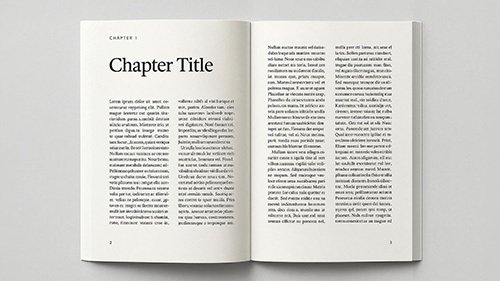
Print book formatting and eBook formatting services use different methods and techniques due to the specific reading needs of each format. Printed books are created for paperback pages; thus, the formatting emphasises trim size, precise measurement, bleed, margins, page numbering, footers, headers, and accurate arrangement of visuals and text. Elements like chapter beginnings, images, charts, and page separations are thoughtfully arranged to achieve a polished printed design.
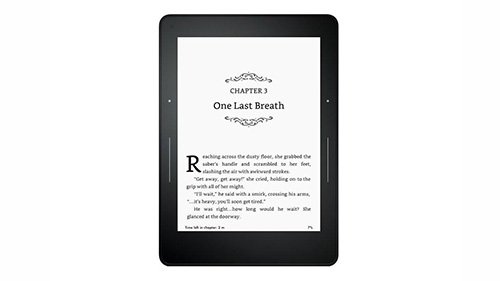
In contrast, eBooks are intended for adaptable digital reading. Their content needs to adjust to different screen dimensions, user-chosen font preferences, and devices. Rather than having strategic page designs, eBook formatting specialist UK typically use reflowable text, enabling readers to modify font size, orientation, and spacing. This indicates that conventional page numbers, headers, and footers might not function well in an eBook.
Images, graphs, and tables also require distinct handling. For print, high-resolution images are important for quality reproduction, whereas eBooks need images that are clear without resulting in excessively large file sizes. Complicated tables might require simplification or redesigning for smaller displays.
Another important aspect to consider is typography. Print-ready book formatting UK can use specific font selections and spacing, while eBooks need fonts and formatting for smooth readability across various devices and platforms.
Consequently, Book Publishers Agency lets authors create distinct files for print and digital versions instead of merely changing one format into another. A neatly formatted print book offers a refined physical reading experience, whereas a correctly formatted eBook guarantees adaptability, accessibility, and compatibility. Taking hold of these distinctions helps authors clear all layout issues and present a polished publication in each format.
Conclusion
A checklist for book formatting is a crucial last step in converting a finished manuscript into a refined, professional, and ready-for-publication book. Each formatting element, including page size, typography, alignment, numbering, images, tables, front matter, and back matter, plays a role in shaping the reader's experience. It helps authors spot minor discrepancies, avoid publishing holdups, and ensure a uniform visual format across the book. When creating a print version or an eBook, meticulous formatting guarantees that the information is conveyed clearly and efficiently. In the end, a comprehensive book formatting check enables authors to maintain the quality of their work and confidently showcase a book that appears as professional as it reads.